In brief
- Forum is designed for the "5%" — the burdens you carry alone that don't fit into any ordinary conversation: the unnamed fears, the ambivalent feelings, the questions without clean answers.
- Sharing at this level requires trust built gradually over time. New members typically start at the surface and move toward genuine vulnerability only after the group has demonstrated it can hold what's shared with care.
- The tell for 5% sharing is emotion, not events. It's not "I'm leaving my company" but "I'm terrified of finding out I was the title, not the person." The emotional layer is what makes it transformative.
- When someone names the unsaid thing in a room of peers, the isolation breaks in a way advice or analysis never could — because others recognize it as their own.
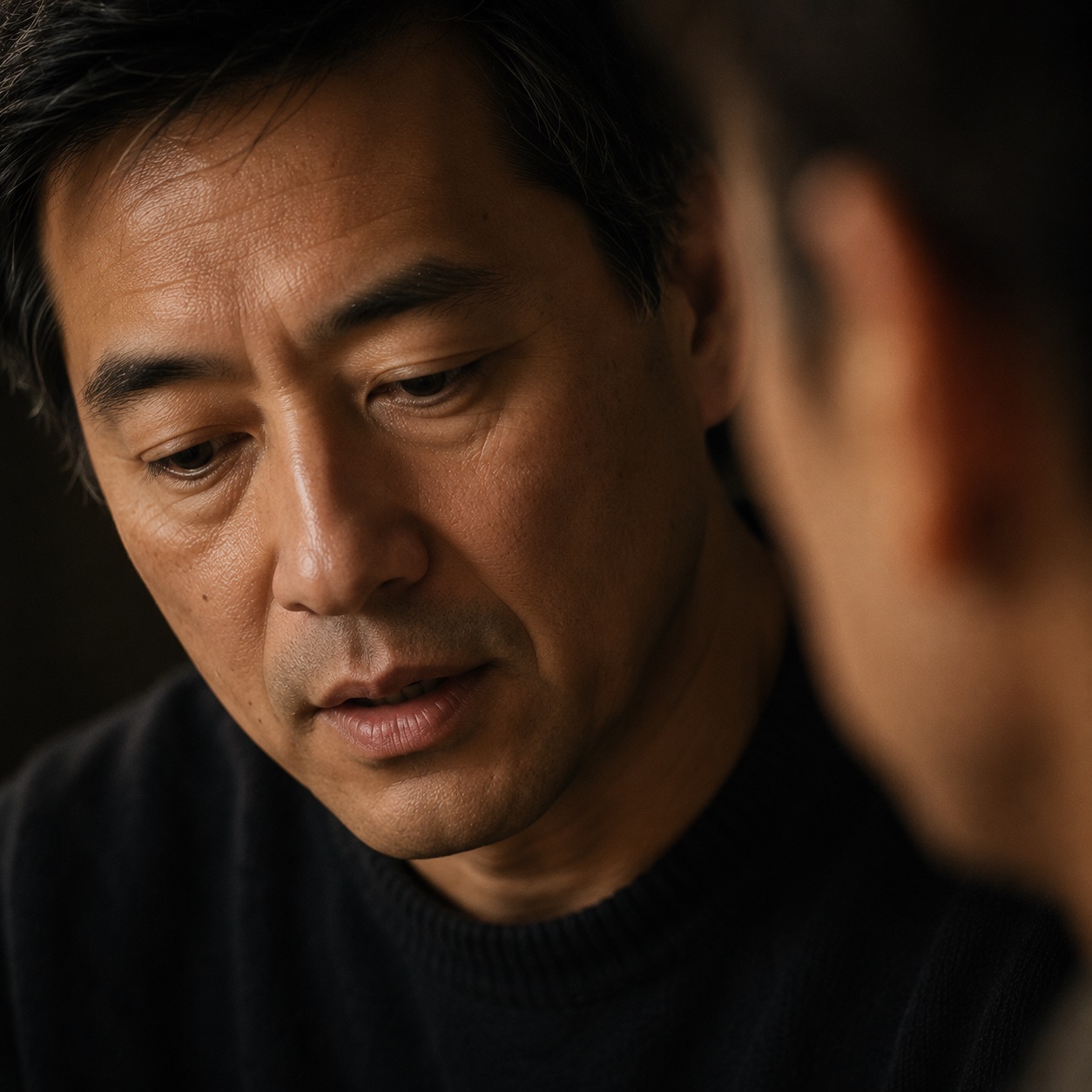
Most of your life is perfectly shareable. You can talk about your work at a dinner party, your vacation with a colleague, your kids' school with the other parents. Maybe 95% of what's happening in your life could come up in any reasonably comfortable conversation.
Forum is for the other 5%.
The 5% is the thing you haven't said out loud to anyone. The fear you haven't named. The question you're carrying about your marriage, your career, your identity that doesn't have a clean answer and doesn't fit neatly into a conversation over coffee. It might be something you're proud of that you can't say without sounding like you're bragging. It might be something you're ashamed of that you can't say without feeling exposed. Either way, it lives at the edge of what you're willing to share — and that edge is exactly where forum does its work.
The concept comes from a simple observation about disclosure. In forum training, facilitators describe three levels of conversation. Level one is surface — the topics you'd discuss with many people outside forum. Business updates, logistics, general news. Level two goes deeper — topics you'd share only with a few trusted confidants. A struggle at work, a tension in a relationship, a health concern you're navigating. Level three is the territory that has never been shared with anyone before. Full vulnerability. Real emotion. The 5%.
Moving through these levels isn't about performing vulnerability or forcing confession. It's about recognizing that most of us have something we're carrying alone — and that carrying it alone is part of what makes it heavy. Forum creates a structure where that weight can be set down, not to be fixed or analyzed, but to be witnessed by people who take it seriously.
What does the 5% actually sound like? It starts with a feeling. That's the tell. Surface updates describe events: what happened, when, what's next. The 5% describes what the event did to you. Not "I'm considering leaving my company" but "I'm terrified that if I leave, I'll find out I was the title and not the person." Not "my father is in the hospital" but "I'm angry at him for getting sick and I don't know what to do with that." The facts may be the same. The emotional layer is what makes it 5%.
Forum trainers have found that certain kinds of questions reliably open this territory. "What dream have you never had the courage to act on?" "What are you hiding?" "What are you not sharing because you don't want to seem imperfect?" These questions share a structure: they assume there's something underneath the surface, and they give you permission to go there. They contain a feeling — courage, fear, shame — which signals that the answer should too.
This is different from therapy, though the territory can overlap. A therapist helps you understand your patterns over time. Forum gives you a room full of peers who are living their own version of the same difficulty. When you share at the 5% level, you're not asking for a diagnosis. You're asking to be less alone with whatever you're carrying. And when the people around you respond with their own experience — their own 5% — the isolation breaks in a way that advice, analysis, or reassurance never could.
New forums don't start here. You can't walk into a room of strangers and share the thing you've never told anyone. Trust has to be built, and trust is built through the smaller disclosures — level one and level two — that demonstrate the group can hold what's shared with care and confidentiality. A new member might share a business challenge in their first meeting, a family tension by their third, and something genuinely unguarded by their sixth or seventh. That progression is natural and healthy. Pushing for depth before trust is established produces performance, not vulnerability.
The moderator's job is to model the progression and create the conditions for it to happen organically. Communication starters that ask for a feeling, not a fact. Update formats that prompt reflection, not reporting. Questions that go one layer deeper than the group's current comfort zone. Not two layers. One. The 5% is a moving target — what felt like an edge six months ago may feel comfortable now. The invitation is always to take one more step toward honesty.
There's something counterintuitive about all of this. You'd think that sharing your most vulnerable material with a group would make you feel more exposed. What people actually report is the opposite. Naming the thing — saying it out loud in a room where it's received without judgment — reduces its power. The shame or fear or confusion doesn't disappear, but it stops being a secret. And a difficulty you can talk about openly is a fundamentally different difficulty than one you carry in silence.
That's the mechanism. Not catharsis, not confession, not therapy. Just the simple act of saying the unsaid thing to people who will hear it, hold it, and share their own version of it. The 5% is what makes forum different from every other professional group, networking circle, or peer advisory board. Without it, you have a group of smart people exchanging useful information. With it, you have something that can actually change how someone lives.
Every forum member gets to decide how far they go. There's no requirement to share anything you're not ready to share. But most people find that the edge is where the value is. The meetings where someone brings their 5% are the meetings people remember years later. Not because of the drama, but because of the recognition — the sudden, quiet realization that the thing you thought was yours alone is actually shared by everyone in the room.
🦉 Explore with Sage
Ask Forum Sage about the 5% — the things members haven't yet said out loud.